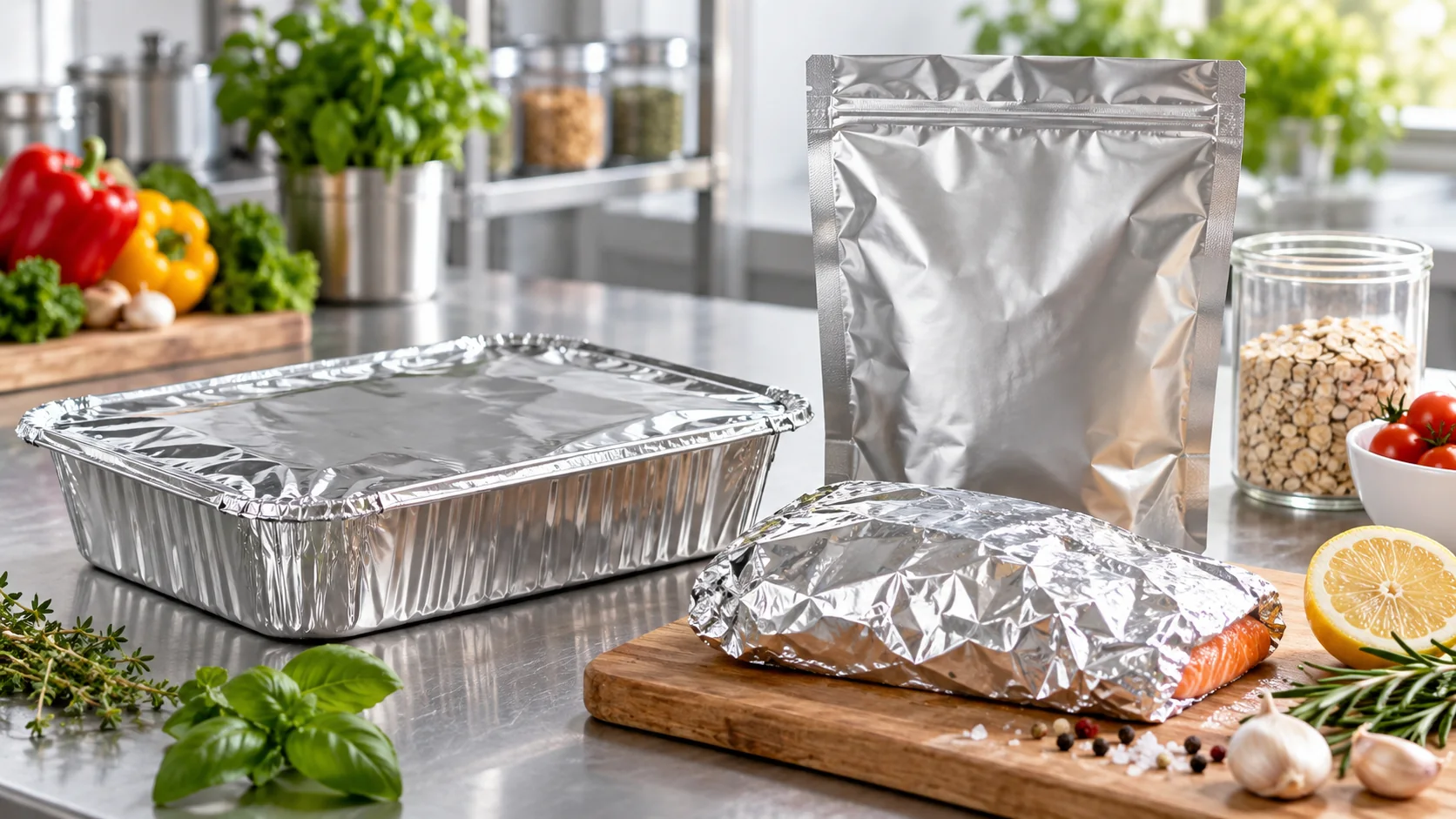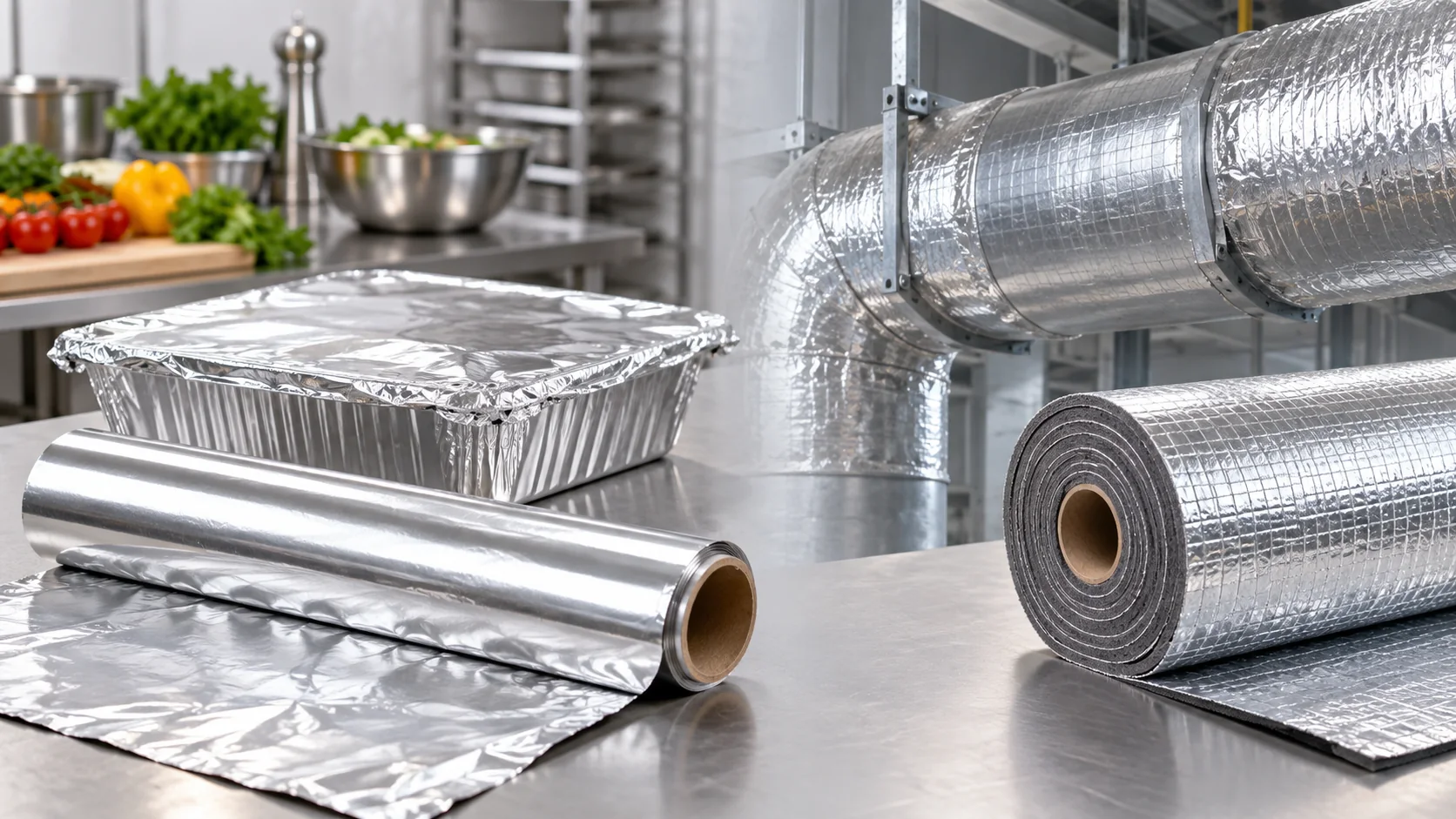
“Food-grade” and “industrial” describe end-use requirements, not two universally interchangeable foil products. Both may begin with aluminium rolled to a specified thickness and temper, but the acceptable surface condition, cleanliness, coatings, documentation, converting process, and finished-package validation can be very different.
A useful purchase specification should therefore say more than “aluminium foil.” It should describe what the foil will contact, how it will be converted, what performance the final package must deliver, and which declarations or test records are required.
What Food-Grade Aluminium Foil Needs to Address
Foil intended for food contact should be selected for the specific product and market. The supplier and converter need to understand direct or indirect contact, food type, time and temperature of use, filling method, reheating conditions, and whether coatings, inks, adhesives, or sealants will also contact the food.
Typical considerations include surface cleanliness, lubricant residues, odour and taste neutrality, traceability, compatibility with acidic or salty foods, and documentation appropriate to the intended sales region. If the foil is lacquered, laminated, printed, or heat-sealed, the complete structure—not only the bare metal—must be reviewed.
What Industrial Aluminium Foil Needs to Address
Industrial foil is commonly specified for insulation facings, HVAC systems, heat shielding, cable wraps, electronics, technical laminates, and protective packaging. Here the design priorities may include emissivity, thermal reflection, corrosion resistance, electrical behavior, adhesion, surface treatment, outdoor durability, flame performance of a laminate, or compatibility with a particular adhesive.
That does not mean industrial foil is lower quality. It means quality is measured against a different job. A foil optimized for deep drawing into a food tray may be wrong for a bonded insulation facing, while a technical foil with a specialized coating may be inappropriate for direct food contact.
Key Differences to Put on the Specification
| Requirement | Food applications | Industrial applications |
|---|---|---|
| End-use focus | Product protection, hygiene, sealing, forming, heating or chilled storage | Thermal, electrical, structural, adhesion, corrosion, or environmental performance |
| Surface and coatings | Food-contact suitability and compatibility with the packed product | Compatibility with adhesives, insulation, cables, or technical processes |
| Documentation | Declarations and traceability appropriate to the intended food-contact market | Technical data, process requirements, and project-specific certifications |
| Validation | Migration, seal, shelf-life, heating, and finished-pack tests as applicable | Bond, thermal, corrosion, electrical, weathering, or mechanical tests as applicable |
Thickness, Temper, and Forming Behavior
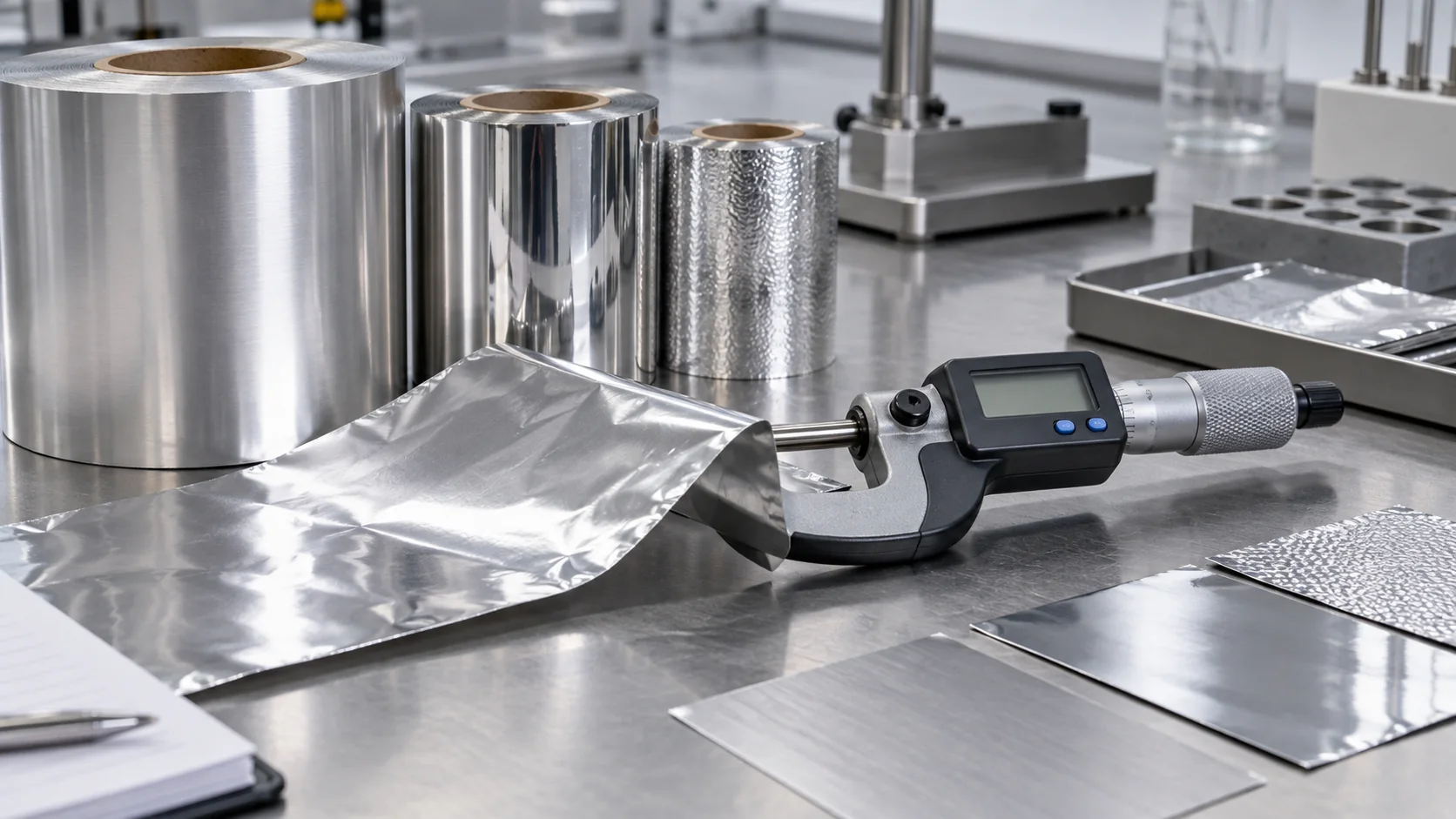
Soft foil is more flexible and suitable for wraps, laminates, and some forming operations. Harder tempers provide different stiffness and handling characteristics. Thickness influences barrier robustness, pinhole risk, forming behavior, dead-fold, puncture resistance, yield, and cost. These variables must be considered together.
For example, a semi-rigid container needs a foil that can form without tearing and then retain its shape. A high-speed lidding web needs consistent unwind, surface treatment, gauge control, and coating performance. An insulation laminate needs reliable bonding and dimensional stability through downstream processing.
Coatings and Laminates Change the Decision
Bare foil may be only one layer in a finished material. Heat-seal lacquer, protective coating, paper, PET, PE, PP, or other layers can add sealability, printability, toughness, chemical resistance, or stiffness. The choice must be based on the complete structure and the way it will be made, filled, sealed, transported, used, and disposed of.
A Better Buyer Checklist
- Describe the product or technical application and whether contact is direct.
- State the target thickness, width, roll diameter, core, temper, alloy, and finish—or ask the supplier to recommend them.
- List converting steps such as printing, laminating, coating, slitting, forming, or heat sealing.
- Define temperatures, chemicals, humidity, light, flexing, and handling conditions.
- Identify the required declarations, certificates, test methods, and traceability records.
- Approve samples through production-line and finished-application trials.
Comparing foil grades for a new application?
WPS can help translate your product, process, and documentation needs into a practical foil specification.
Discuss Your Requirements →Conclusion
The difference between food-grade and industrial foil is defined by intended use and verified performance. Good purchasing starts with the application, not a broad label. Specify the surface, dimensions, temper, coatings, documentation, and tests that matter to the finished product, then validate the selected material under actual converting and use conditions.