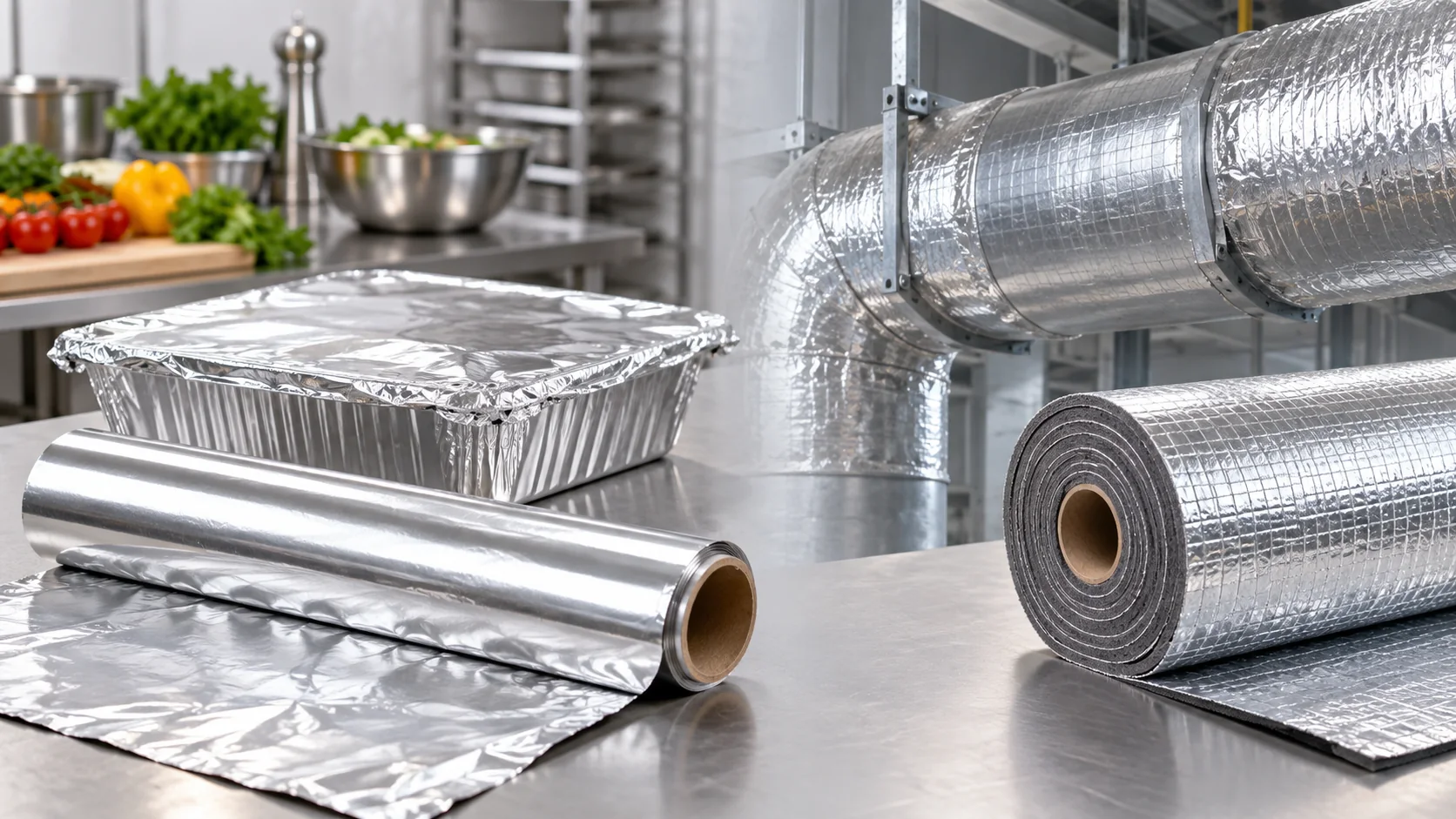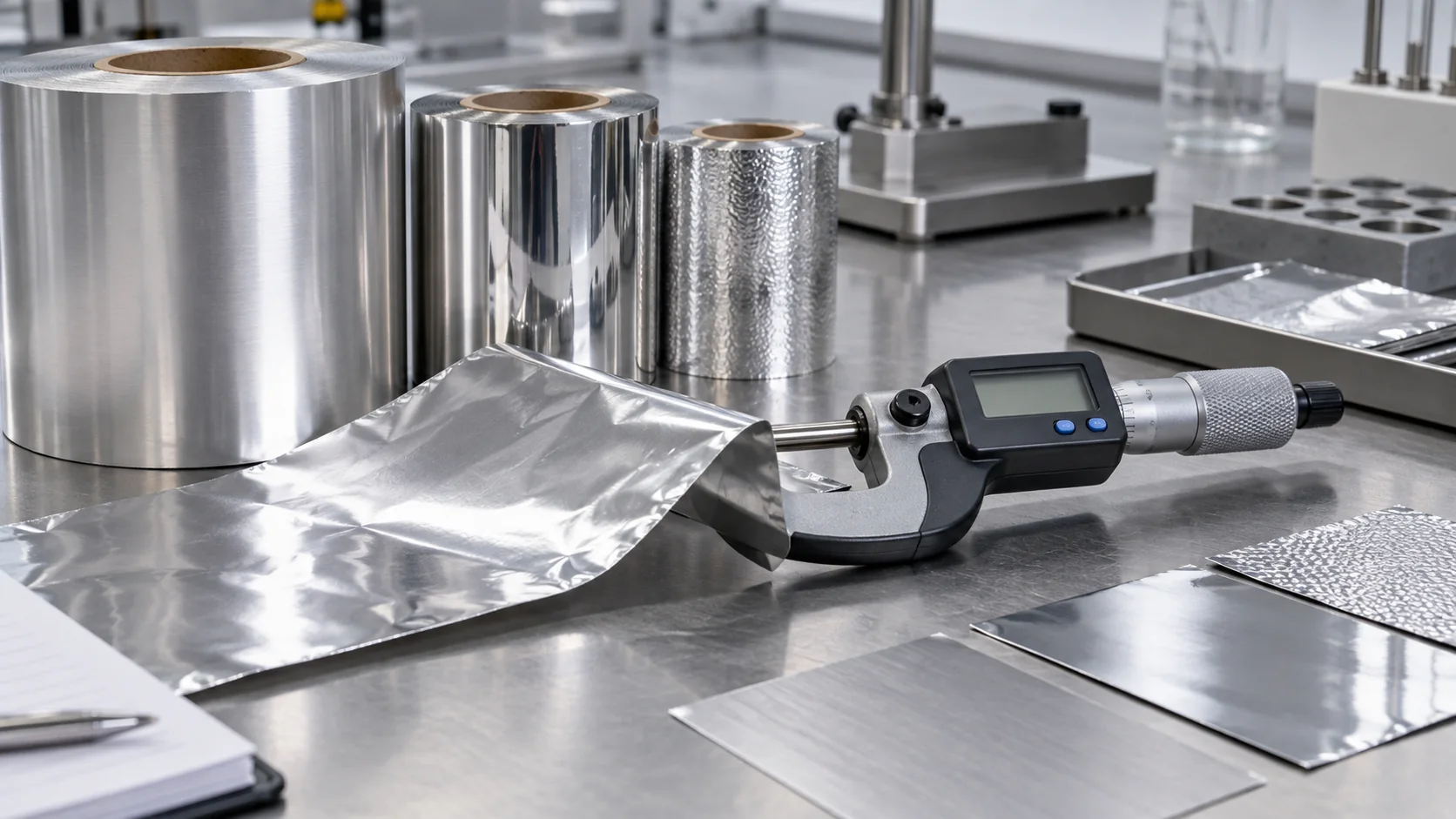
Two foil rolls can look almost identical and behave very differently on a converting line. Thickness influences robustness and yield; temper influences stiffness, ductility, and forming behavior. Alloy, surface finish, width tolerance, roll build, core, and coating can be just as important to production performance.
The goal is not to select the thickest or hardest foil. It is to specify the lightest practical structure that runs consistently, protects the product, and survives distribution and use.
Start With the Finished Application
Before discussing microns or gauge, define the package format and process. Is the foil being wrapped, embossed, printed, laminated, heat sealed, folded, die-cut, or formed into a container? Will it face sharp product edges, repeated flexing, high heat, cold storage, chemicals, or outdoor exposure?
These details determine which material characteristics should drive the specification. A laminate web needs different behavior from a semi-rigid tray. Lidding foil has different surface and seal requirements from an insulation facing.
What Foil Thickness Changes
Increasing thickness generally adds metal, stiffness, and resistance to small defects or handling damage. It also reduces yield per unit weight and may require different converting settings. Very thin foil can provide excellent barrier when intact, but the finished structure must protect it from puncture, flex cracking, and process damage.
- Barrier robustness: a thicker foil may better tolerate some handling demands, but seals and laminate integrity remain essential.
- Forming: thickness affects draw behavior, wall stability, and resistance to tearing in semi-rigid formats.
- Dead-fold: foil can retain a fold, an advantage for wraps and closures; the effect depends on temper and structure as well as thickness.
- Machine setup: unwind tension, wrinkle control, slitting, embossing, and sealing settings may need adjustment.
- Economics: adding thickness increases material per square metre, so unnecessary over-specification can add recurring cost.
What Temper Means
Temper describes the mechanical condition of the metal after rolling and heat treatment. Softer foil is generally more ductile and conformable. Harder tempers are generally stiffer and can suit applications where handling, shape, or machinability benefits from added rigidity.
Temper is not a standalone quality score. A soft foil is not automatically better for forming, and a hard foil is not automatically more durable. The correct condition depends on alloy, thickness, geometry, process speed, and the stresses placed on the finished material.
| Application | Key specification questions |
|---|---|
| Flexible laminates | Can the foil laminate without wrinkles and withstand expected flexing, sealing, and distribution? |
| Lidding | Does the foil unwind, emboss, print, coat, and seal consistently to the selected container? |
| Wraps and sheets | Does it fold, conform, cut, and release as required without tearing? |
| Semi-rigid containers | Can it form to the tool geometry and retain adequate wall and rim strength? |
| Industrial laminates | Does the surface bond to the selected adhesive and deliver the intended thermal or technical behavior? |
Do Not Overlook Alloy and Surface Finish
Alloy selection influences mechanical behavior and forming characteristics. Surface finish can affect appearance, coating, printing, bonding, friction, and optical performance. Foil may have a bright side and a matte side as a result of the rolling process; the practical significance depends on the application and any downstream surface treatment.
Roll Geometry Is Part of the Specification
Even the correct foil can run poorly if the roll does not fit the equipment. State finished width and tolerance, maximum outer diameter, core inside diameter and material, winding direction, splice rules, edge quality, and packaging orientation. Discuss roll hardness, telescoping, and blocking if they have caused past problems.
How to Qualify a New Foil
- Document the current material and identify the actual problem or improvement target.
- Agree on thickness, temper, alloy, finish, dimensions, coatings, and tolerances.
- Run a controlled trial through every converting and packing step.
- Inspect wrinkles, breaks, seals, forming, registration, surface defects, and finished-pack appearance.
- Test barrier or application performance on the finished structure.
- Complete shelf-life or distribution testing before full-scale adoption where relevant.
A successful trial should record machine conditions and results. That turns a one-time sample run into a repeatable production standard for incoming material and future suppliers.
Need help building a foil specification?
Share your equipment, converting steps, finished format, and performance targets with WPS.
Request a Recommendation →Conclusion
Thickness and temper matter, but neither should be selected in isolation. The most dependable specification connects foil dimensions and mechanical condition to the converting line and the finished application. Define the job, agree on measurable tolerances, and validate the complete structure under real production and use conditions.