Food quality changes when light, oxygen, moisture, heat, or outside odours reach the product. The purpose of a well-designed package is to slow those changes for the intended distribution period. Aluminium foil is valuable because it can provide an exceptionally strong barrier in a very thin layer, helping protect flavour, aroma, colour, texture, and nutritional quality.
Foil is not a complete package by itself in every application. Seals, closures, coatings, laminate layers, handling conditions, and storage temperature all contribute to performance. Understanding the role of each element makes it easier to specify a pack that protects the product without adding unnecessary material.
The Four Exposure Pathways Foil Helps Control
1. Light
Light can trigger oxidation and colour change in sensitive foods. Because aluminium foil is opaque, it offers protection across the visible and ultraviolet portions of the spectrum. This is useful for products such as fats, oils, dairy ingredients, coffee, spices, and nutritional powders whose quality may deteriorate when exposed to light.
2. Oxygen
Oxygen can contribute to rancidity, flavour loss, and changes in colour. An intact foil layer is a strong oxygen barrier. In a flexible laminate, however, overall performance also depends on the seals and on preventing flex cracks or pinholes during converting and distribution.
3. Moisture and water vapour
Dry foods may lose crispness when they absorb moisture, while other products can dry out when moisture escapes. Foil helps limit both directions of moisture transfer. The required protection should be matched to the product’s sensitivity, expected shelf life, climate, and storage conditions.
4. Aroma and outside odours
Strong aromas are part of the product experience for coffee, tea, herbs, spices, and many prepared foods. Foil can help retain those volatile compounds while limiting the transfer of odours from the surrounding environment.
Where Aluminium Foil Appears in Food Packaging
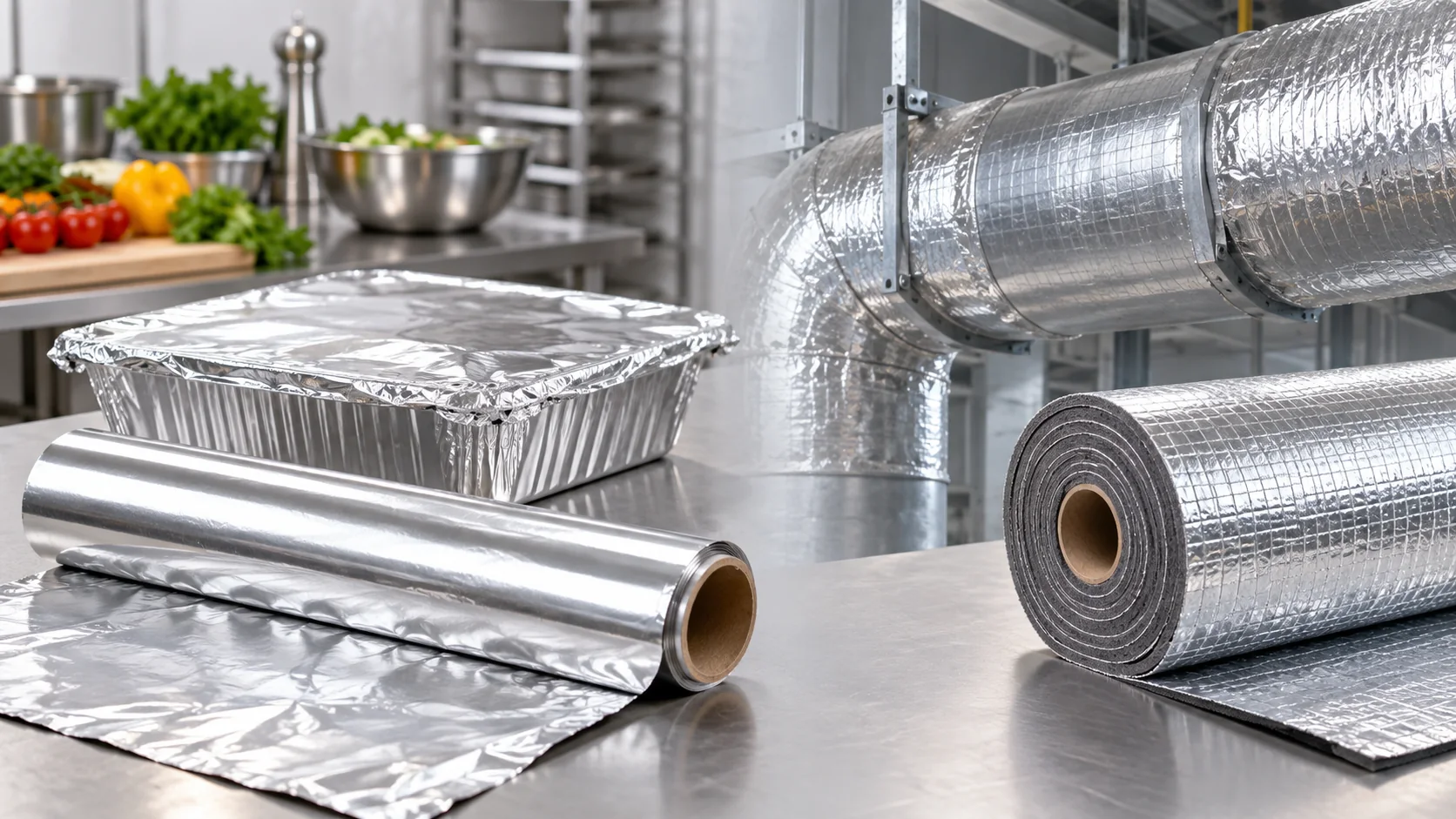
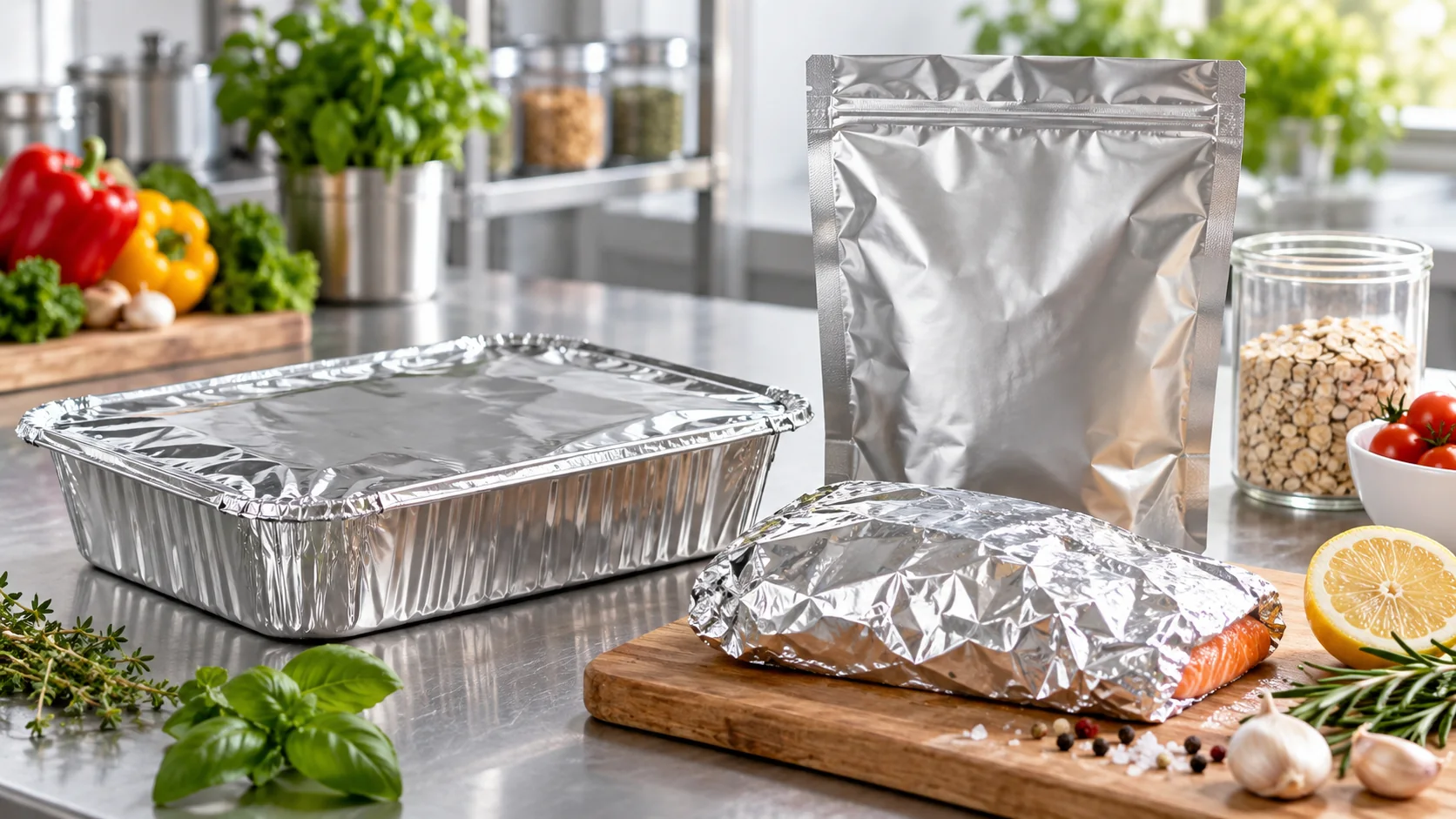
Foil can be supplied as rolls or sheets for wrapping, formed into semi-rigid containers, used as a lidding material, or bonded to other layers in pouches and sachets. Each format solves a different combination of barrier, forming, sealing, presentation, and handling requirements.
- Household and food-service foil provides flexible wrapping, covering, and lining for preparation, storage, and service.
- Foil containers and trays combine shape retention with heat resistance for takeaway, catering, baking, and ready-meal applications.
- Foil lids create a barrier closure for compatible cups, trays, and containers when paired with the correct heat-seal coating.
- Foil laminates add the sealing, toughness, or print surface needed for pouches, sachets, wraps, and reel-fed packaging.
Why the Seal Can Matter as Much as the Foil
A high-barrier web cannot compensate for a weak or contaminated seal. Sealant selection, temperature, pressure, dwell time, and jaw condition should be validated on the actual packing line. Product particles, oils, wrinkles, or misalignment in the seal area can create leakage paths even when the foil itself is intact.
For lidding and laminated structures, specify the container or mating surface early. A sealant that performs well on one polymer may not seal reliably to another. Peel strength requirements also differ: some packs need easy opening, while others prioritize a more permanent closure.
Choosing a Foil Structure for Shelf-Life Goals
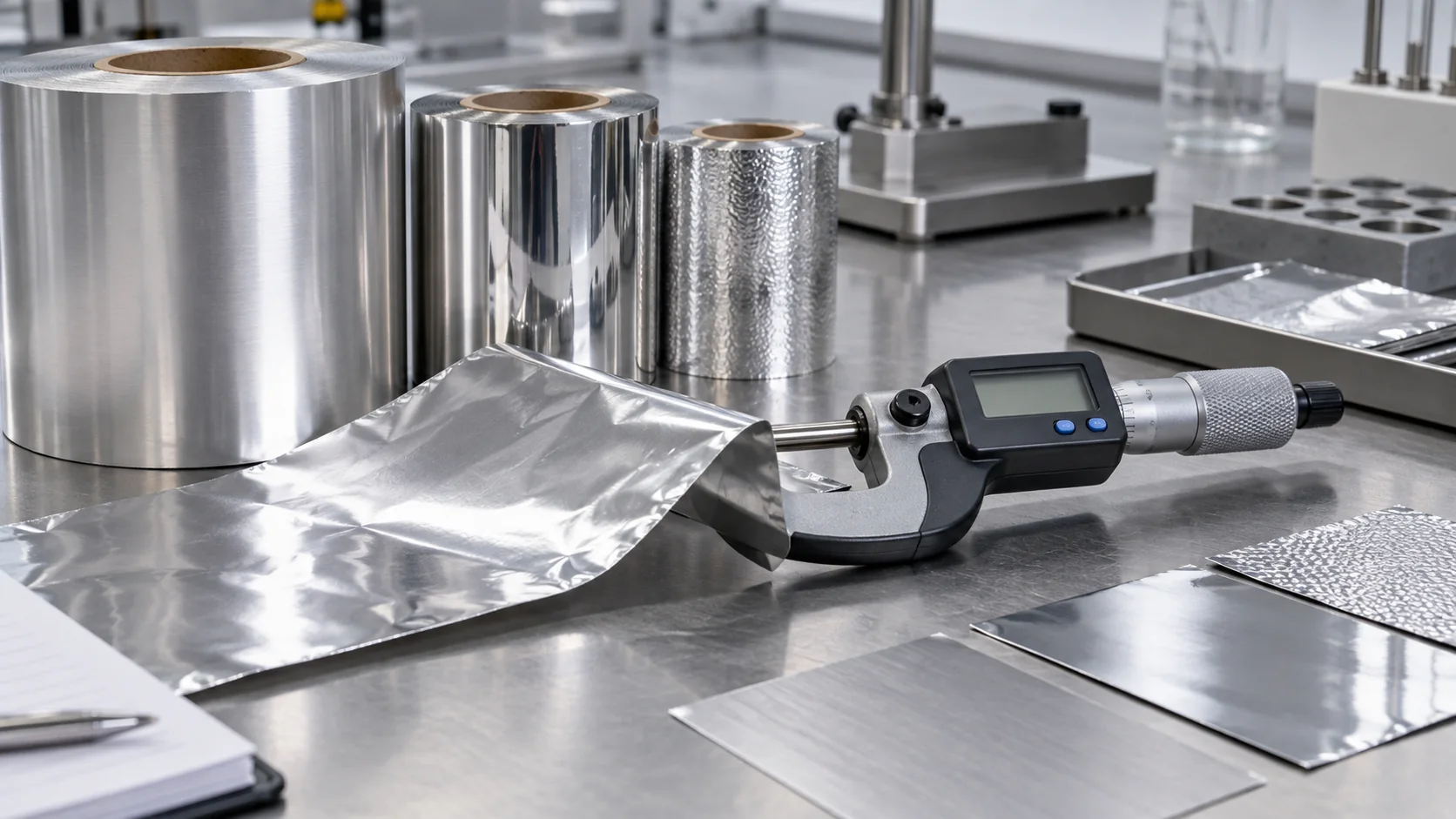
Start with the product, not a generic thickness. Define what causes quality loss, the target shelf life, filling temperature, pack format, sterilization or reheating conditions, and distribution hazards. Your converter or material supplier can then recommend a foil thickness, temper, coating, and laminate structure for testing.
For demanding flexible packs, a foil layer may be combined with an outer layer for printing and toughness and an inner sealant layer for package formation. For a formed container, alloy, temper, thickness, rim design, and lidding compatibility may be more important than printability.
Handling Practices That Preserve Barrier Performance
- Keep rolls and sheets dry, clean, and protected from impact.
- Use controlled web tension and properly aligned rollers during conversion.
- Avoid sharp folds or repeated flexing unless the structure has been validated for it.
- Inspect seals and finished packs at regular intervals during production.
- Run distribution and shelf-life trials using the actual product and final package.
Need a foil structure for a food application?
Share your product, filling process, pack format, and target shelf life with the WPS packaging team.
Talk to a Packaging Specialist →Conclusion
Aluminium foil protects food by controlling several of the most important routes of quality loss: light, oxygen, moisture, aroma transfer, and contamination. The best results come from treating foil as one part of a complete packaging system. Match the foil, coatings, laminate layers, seals, and handling process to the food and validate the finished pack under real conditions.