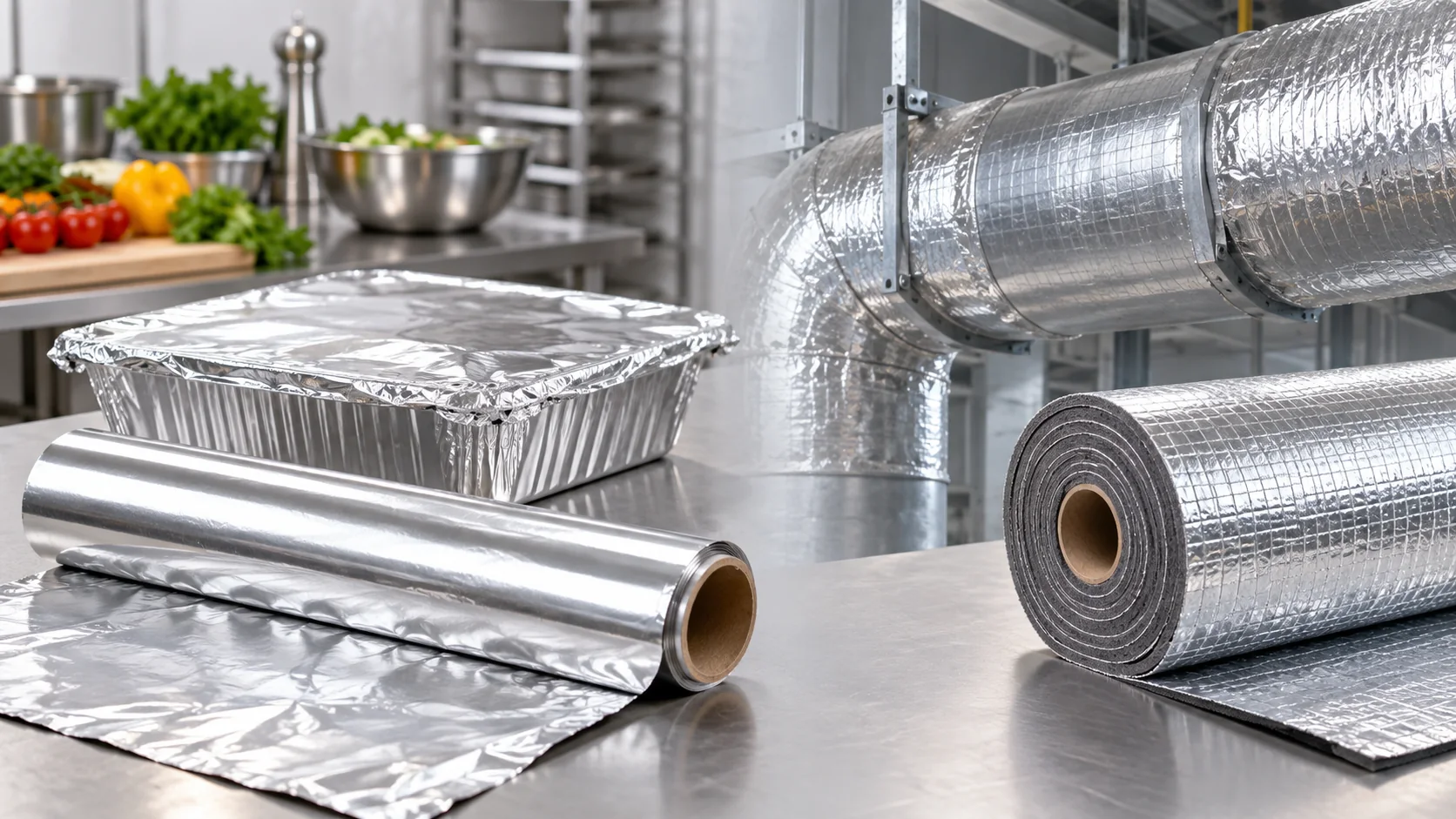
Aluminium foil delivers strong barrier performance, but a thin sheet of foil does not automatically have the toughness, sealability, print surface, or package shape needed by a modern filling line. A laminate solves that problem by assigning different jobs to different layers.
A typical foil laminate may use an outer layer for printing and abuse resistance, adhesive layers to hold the structure together, aluminium foil for barrier, and an inner polymer layer for product contact and heat sealing. The correct combination depends on the product, process, pack format, target shelf life, and distribution environment.
What Each Layer Contributes
Outer web
The outer layer can provide printability, stiffness, scuff resistance, heat resistance, or puncture protection. Paper, PET, and other films are selected according to appearance and process needs. Reverse printing can place ink between layers, helping protect graphics from rubbing.
Aluminium foil barrier
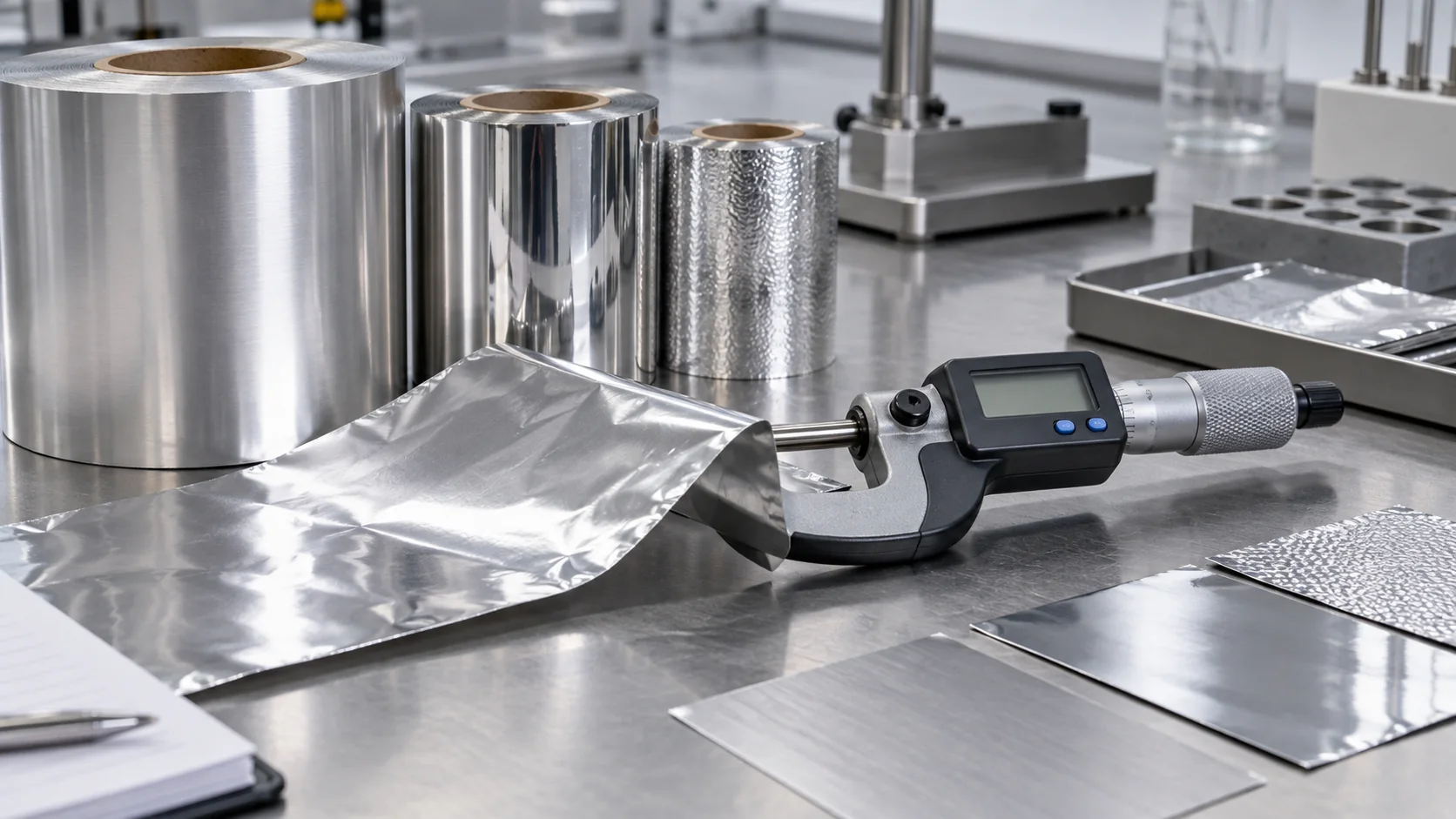
The foil layer protects against light and can provide very low transmission of oxygen, water vapour, and aromas when the layer remains intact. Thickness and temper should be selected for the conversion and handling demands of the application.
Sealant or contact layer
The inside layer creates the package seals and may also provide toughness, chemical resistance, or compatibility with the product. Its sealing window must suit the filling speed, jaw design, dwell time, pressure, and expected contamination in the seal area.
Adhesives and coatings
Adhesives bond the layers and must withstand expected heat, humidity, chemicals, aging, and package flexing. Coatings can add heat sealability, corrosion protection, release, print reception, or other surface properties. Cure time and bond development should be included in production planning.
When Foil Laminates Are a Strong Candidate
- The product is highly sensitive to oxygen, moisture, light, or aroma loss.
- A long shelf-life target makes barrier stability a priority.
- The package requires both strong barrier and dependable heat seals.
- The outside surface needs high-quality printing or added scuff resistance.
- The pack will be processed at elevated temperature, subject to the suitability of the complete structure.
- Small sachets or unit-dose formats need high barrier in a compact area.
Common Package Formats
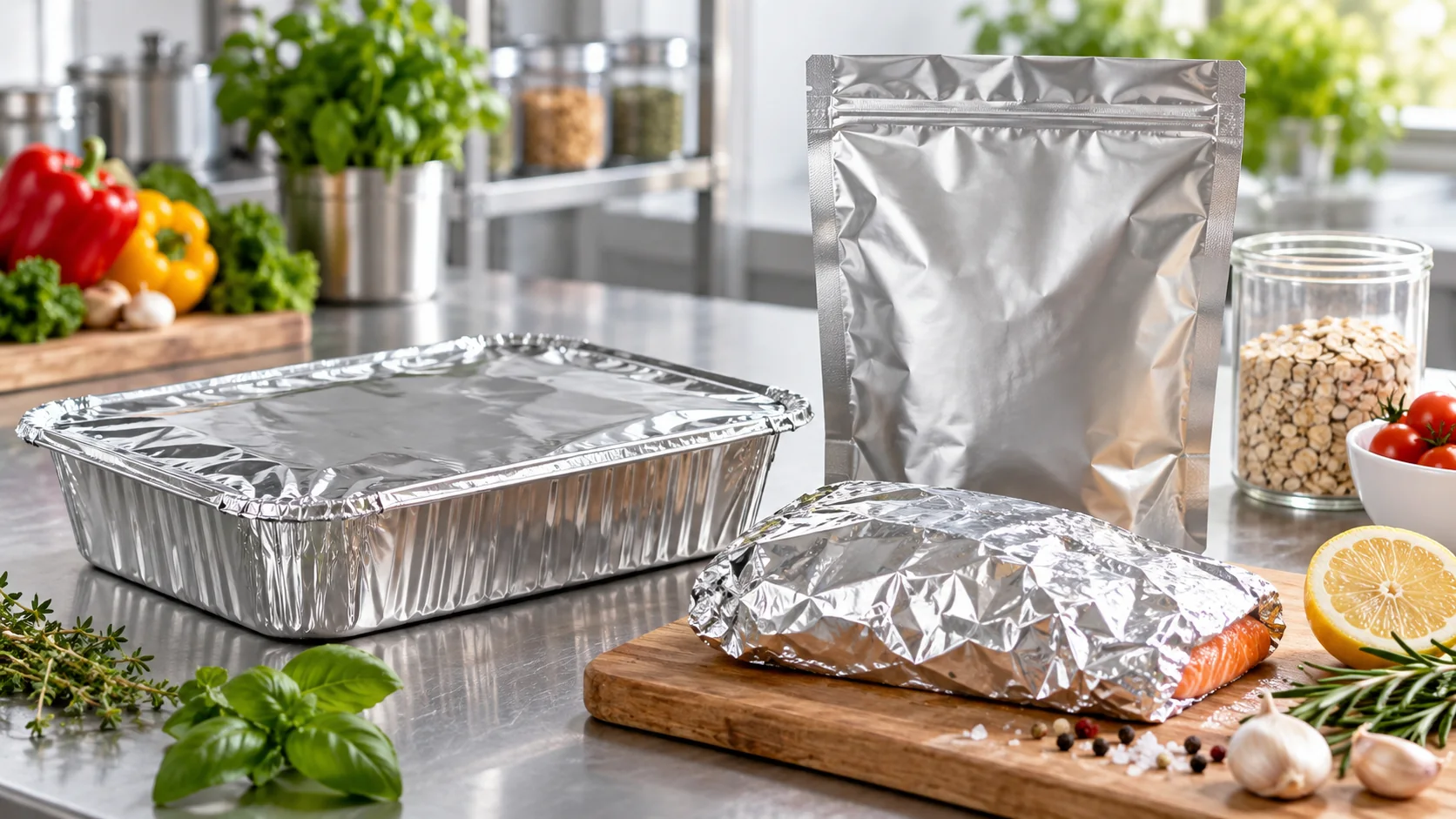
Foil laminates are used in sachets, stick packs, three-side-seal pouches, stand-up pouches, flow wraps, lidding, wraps, and technical barrier bags. The package geometry changes the stresses placed on the foil. Gussets, tight folds, zipper areas, and repeated flexing should be reviewed because they can concentrate strain.
How Flex Cracking and Pinholes Affect Barrier
Foil barrier depends on continuity. A laminate that is folded, creased, or repeatedly flexed beyond its design limits can develop small channels or cracks. These defects may be difficult to see yet still change package performance. Protective outer layers, suitable foil thickness and temper, generous fold radii, controlled converting tension, and distribution testing all help manage the risk.
Seal Design and Product Compatibility
Seal failures often occur before the barrier layer becomes the limiting factor. Select a sealant that bonds at the required line speed and is compatible with the product and processing conditions. For powders, crumbs, oils, or liquids that may enter the seal area, trial the actual product rather than evaluating clean laboratory seals only.
Also consider whether the package needs easy opening, a permanent seal, peelable lidding, resealability, or tear initiation. These features influence sealant choice, seal geometry, notches, laser scoring, and the balance between opening force and package integrity.
Questions to Answer Before Requesting a Quote
- What product will be packed, and what causes its quality to decline?
- What shelf life and storage conditions are required?
- What package format and filling equipment will be used?
- Will the structure be printed, sterilized, frozen, reheated, or exposed to chemicals?
- What seal strength, opening behavior, and drop or distribution performance are needed?
- Which dimensions, core, roll diameter, winding direction, and registration requirements apply?
- What food-contact or technical documentation is required for the sales market?
Qualifying the Finished Structure
Evaluate more than a supplier data sheet. Run the laminate on the intended equipment, form and seal finished packages, and test them after realistic conditioning and distribution. Depending on the product, qualification may include bond strength, seal strength, leak testing, barrier testing, flex durability, drop testing, compatibility, and shelf-life studies.
Building a foil laminate structure?
WPS can help connect barrier, seal, printing, and converting requirements to a practical material recommendation.
Talk to a Packaging Specialist →Conclusion
Use an aluminium foil laminate when the application needs foil-level barrier plus functions that bare foil cannot provide alone. A good structure gives each layer a clear job and is validated as a complete package. Define the product risks, line conditions, seals, handling stresses, and shelf-life target before selecting the layers.