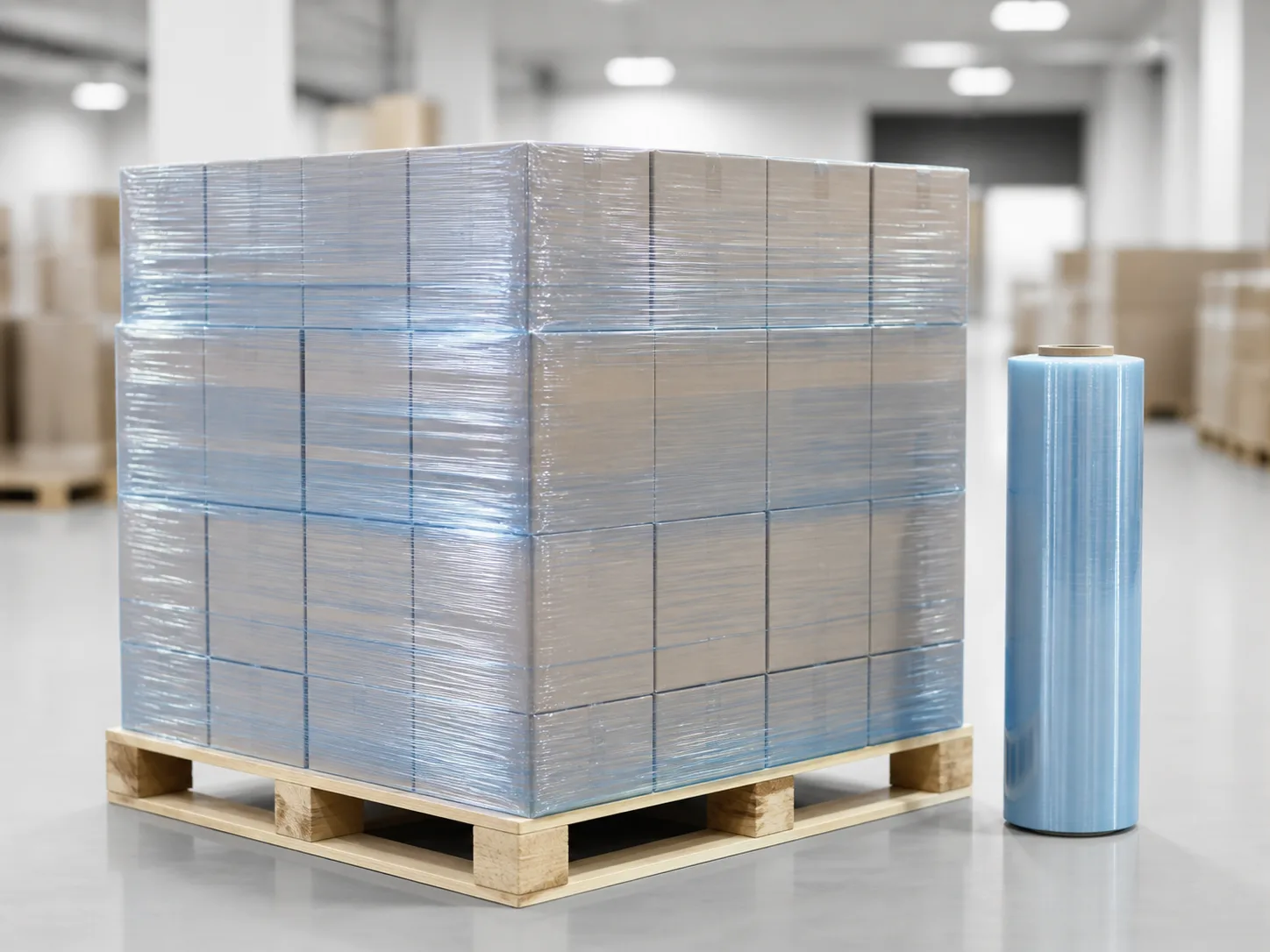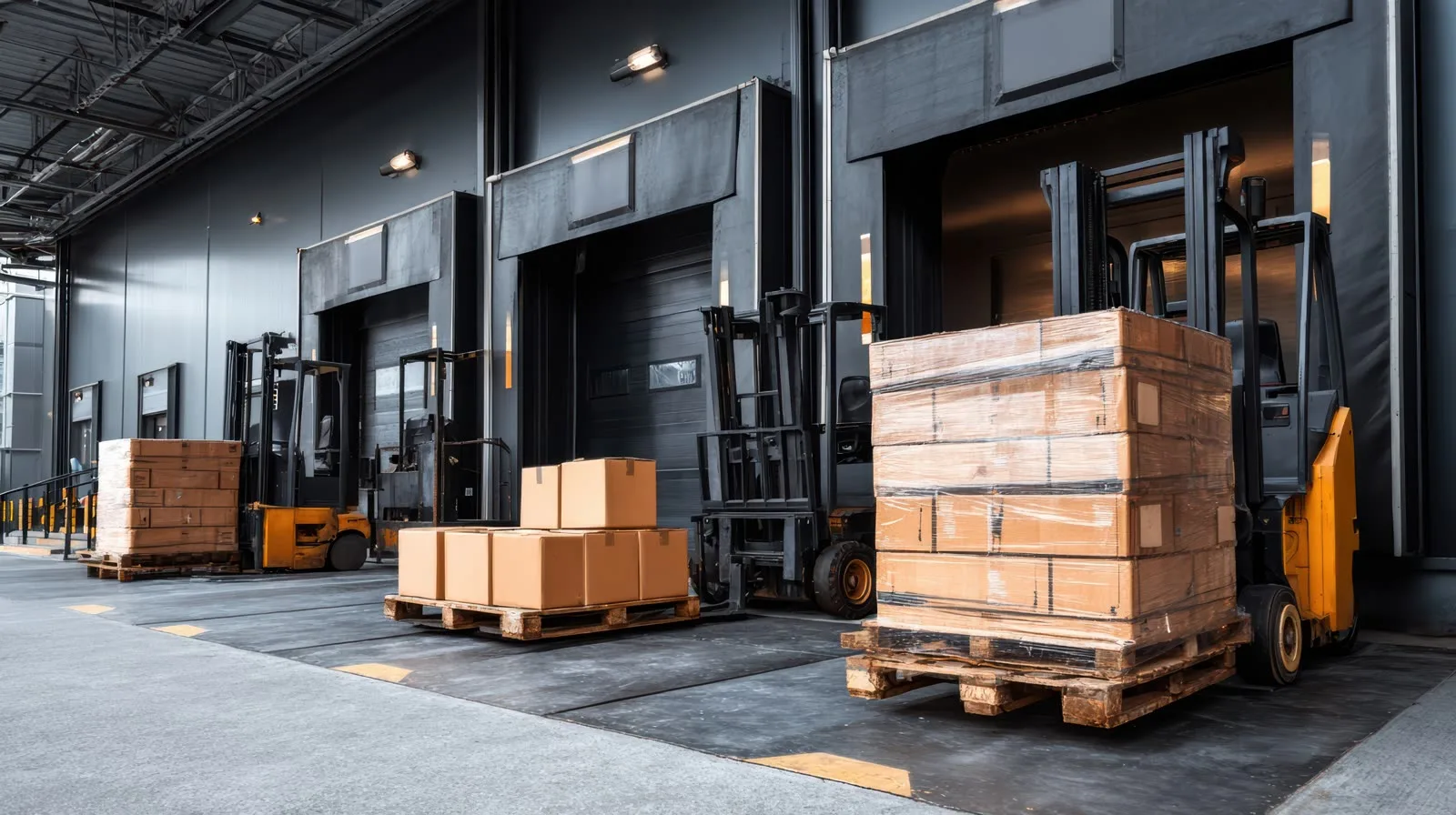
A pallet that arrives leaning, shifted, or collapsed does not just look bad at the receiving dock. It means damaged goods, a chargeback, and a customer who now has a reason to question your packaging. Most load failures are not a materials problem. They are a wrap force problem: the film was not stretched or applied in a way that holds the load together under real transport stress.
What Actually Holds a Load Together
Stretch film does not secure a pallet by being strong the way a strap is strong. It secures a pallet by elongating, stretching around the load and then pulling back toward its original length. That constant inward pull is called containment force, and it is the single biggest factor in whether a load survives transit.
Two loads wrapped in the same film can perform completely differently depending on how much the film was stretched during application, how many wraps were applied, and where on the load those wraps were placed.
More wraps concentrated at the top and bottom of a load, where shifting starts, generally do more for stability than the same amount of film spread evenly across the middle.
The Three Most Common Causes of Load Failure
1. Under-stretched film
If the film is not pulled tight enough during application, by hand or by machine, it never builds enough containment force to resist the load settling and shifting in transit. This is the most common failure mode on hand-wrapped pallets, since manual tension varies from wrap to wrap and from person to person.
2. Wrong gauge for the load
Heavier, denser, or irregularly shaped loads need either more wraps or a film engineered for higher load retention. Using a lighter gauge than the load calls for is a common way operations try to save on material cost, and it is one of the fastest ways to turn that saving into a damaged freight claim.
3. Inconsistent application
Gaps in coverage, especially at the top and bottom of the load, let a pallet shift exactly where it is most vulnerable. Machine grade film, applied with consistent pre-stretch, tends to close this gap more reliably than hand wrapping does at scale. See our hand wrap vs. machine wrap guide for how to decide which fits your operation.
Does the Type of Stretch Film Matter for Load Failure?
Yes, though not in the way buyers often expect. The film family matters less for raw containment force than gauge and wrap count do, but each type brings a different practical tradeoff to load stability.
PE (polyethylene) stretch film is the standard choice for most general palletizing. It offers a predictable balance of elongation and puncture resistance across a wide range of load types, which is why it covers the majority of pallet wrapping applications.
PVC stretch film behaves differently under tension and is more commonly used for smaller, lighter bundling jobs rather than full pallet loads, where its narrower elongation range is less of a limitation.
Antistatic stretch film matters for load integrity in a different way. It is engineered to reduce static charge buildup, which is not primarily a containment issue but a handling and contamination issue. For electronics, sensitive components, or dusty environments, static cling can attract debris to the load surface or create a shock risk during unwrapping, both of which cause their own kind of "failure" at the receiving end even when containment force was never the problem.
What Does the Research Say About Wrap Count and Containment Force?
A 2025 study published in the journal Sensors by Tkaczyk, Jagelčák, Szpotański, and Sędrowicz measured how stabilizing force builds across repeated wraps on LLDPE stretch film between 15 and 23 microns. The researchers found a consistent, near-linear relationship: force increased steadily with each additional wrap, then leveled off once diminishing returns set in. That means the instinct to "just add more wraps" has a real ceiling, not an unlimited payoff.
Their practical recommendation was to target roughly eight wraps at 200 to 250 percent pre-stretch as the point that balances load safety, material cost, and film consumption. Beyond that point, additional wraps added cost without a proportional gain in containment force.
This matters for buyers because it turns "wrap it more" from a vague instinct into a testable target. If a load is failing, the fix is not always a thicker film. It may simply be that wrap count or pre-stretch percentage has not reached the range where containment force stabilizes.
How to Choose Gauge for Load Stability
WPS stretch film is available from 8 to 30 microns. As a general starting point:
- Lighter, uniform loads such as cartons or light case goods can often be secured with film at the lower end of the range, applied with adequate wraps.
- Heavier or irregular loads, including mixed pallets, uneven stacking, or higher-value freight, generally call for a heavier gauge or additional wraps concentrated at load-bearing points.
- High-volume, consistent SKUs are often better served by machine grade, pre-stretched film, which can reach a higher containment force at a lower gauge than hand wrapping typically achieves.
These are starting points, not a substitute for testing against actual loads. Every operation's mix of load weight, shape, and transit distance is different, and the wrap-count research above only holds as a guideline until it is confirmed against real shipments. See our stretch film gauge guide for how gauge and microns actually convert.
When Should You NOT Rely on Stretch Film Alone?
Stretch film is not the right containment method for every load. Extremely heavy or top-heavy pallets sometimes need strapping or corner boards in addition to film, not instead of it. Loads with sharp edges or exposed banding can puncture film regardless of gauge, which calls for edge protection first. Palletized loads headed for long-term outdoor storage may need a UV-stabilized film rather than a standard grade, since standard film degrades under prolonged sun exposure.
How Do You Measure Whether Your Wrap Is Actually Working?
The most direct measure is a transit or drop test on a representative pallet before committing to a wrap standard at volume. ISTA (the International Safe Transit Association) publishes standardized package and pallet transit test procedures used across the packaging industry to verify performance before a design ships at scale, rather than relying on a spec sheet alone. Watching for film that tears at the corners, wraps that loosen after a day in transit, or loads that arrive shifted are all signs the current wrap force, gauge, or wrap count is not matched to the load. Testing against a real shipment, or a recognized test procedure, beats guessing every time.
Conclusion
Load failure is rarely about buying a "stronger" film. It is about matching wrap force, gauge, wrap count, and film type to the actual load being shipped. Get those factors right, using a real test rather than a guess, and the film does the job it is engineered to do. Talk to WPS about your load types for a wrap force and gauge recommendation.