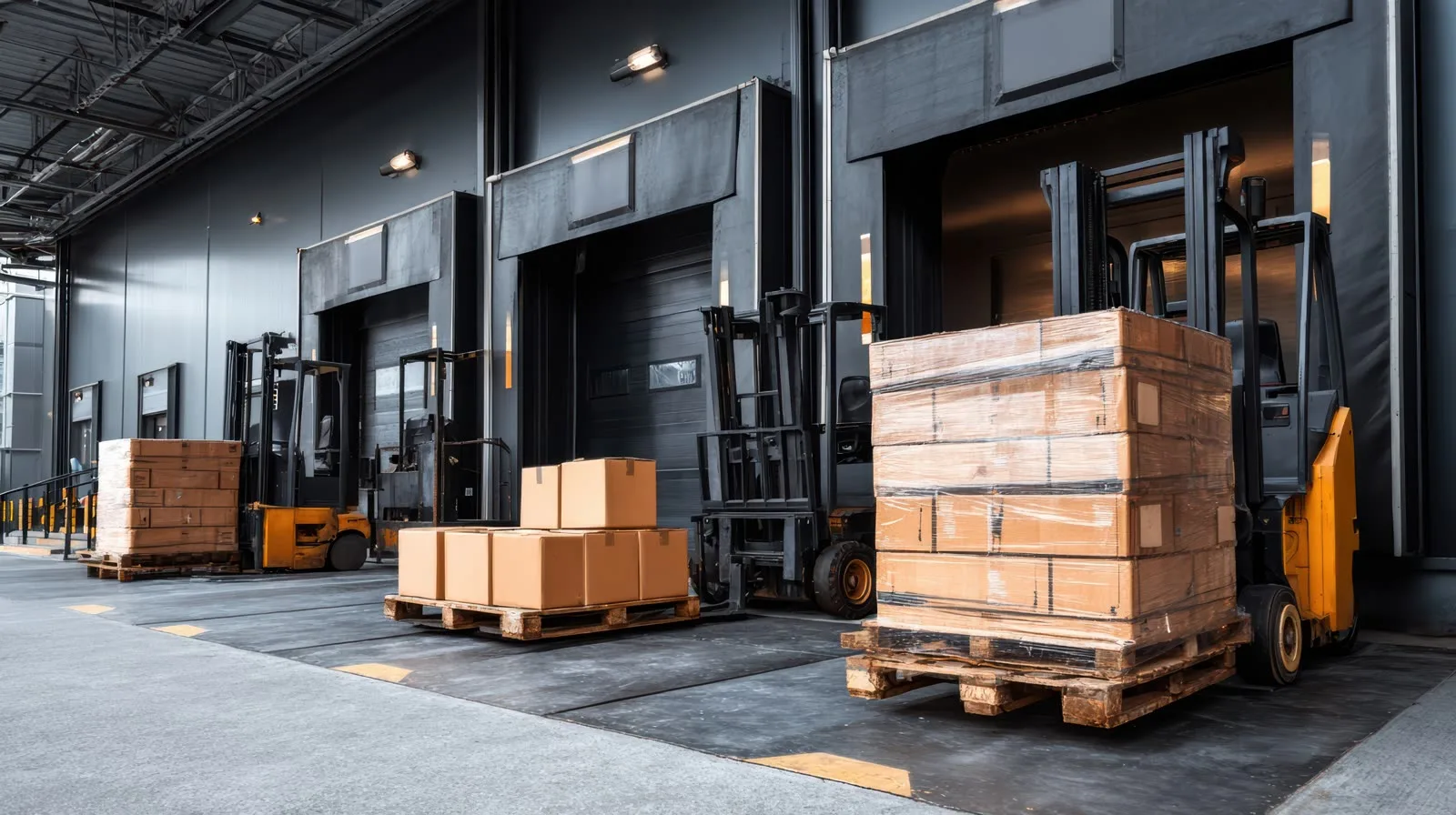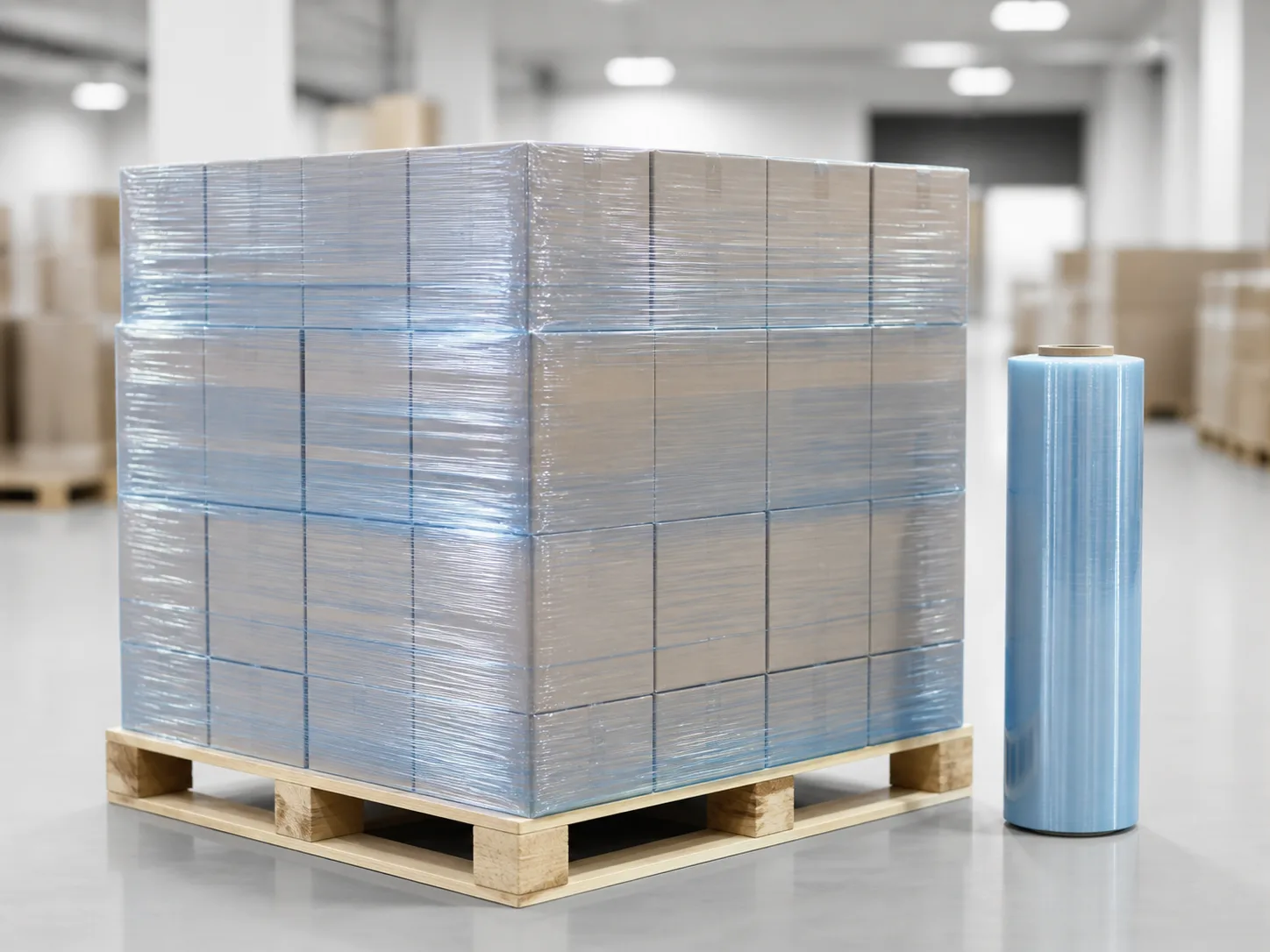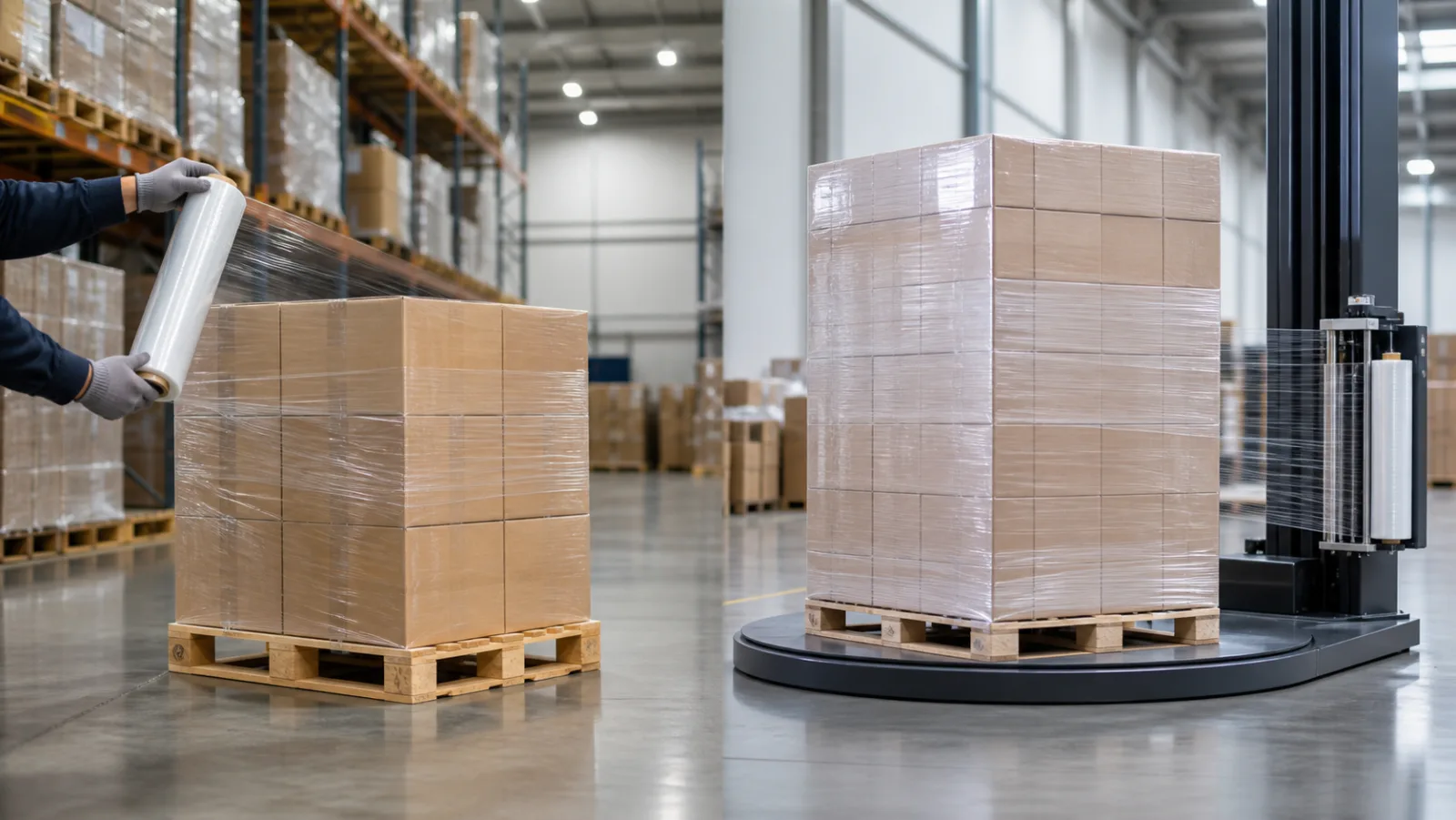
The question is not which grade of stretch film is better. It is which one matches your volume, your equipment, and the loads you actually ship. Get the grade wrong and you either overspend on film you do not need, or under-secure loads that need more consistency than manual wrapping can deliver.
The Core Difference
Hand wrap grade is applied manually, wrap by wrap, with tension controlled entirely by the person doing the wrapping. Machine grade is designed for automatic or semi-automatic wrapping equipment, which mechanically pre-stretches the film during application, applying it at a consistent, often much higher, elongation than a person can reliably achieve by hand.
That single difference, who or what is doing the stretching, drives nearly every other tradeoff between the two grades.
| Hand Wrap Grade | Machine Grade | |
|---|---|---|
| Application | Manual, wrap by wrap | Automatic or semi-automatic wrapping equipment |
| Typical gauge | Higher end of the range, to compensate for less consistent tension | Can run thinner thanks to consistent machine pre-stretch |
| Best for | Irregular loads, mixed pallets, lower volume, no equipment on hand | High-volume, consistent SKUs, repeatable pallet shapes |
| Consistency | Varies by operator | Consistent containment force, wrap after wrap |
| Equipment investment | None required | Wrapping machine required (turntable, rotary arm, or orbital) |
When Hand Wrap Grade Is the Right Call
Hand wrap makes sense when a mix of irregular or one-off loads does not fit a standard machine cycle, when volume does not yet justify the cost of wrapping equipment, or when a dock needs flexibility to wrap in more than one location rather than at a single fixed station. It is also the practical fallback for overflow loads even at operations that primarily run machine grade.
When Machine Grade Is the Right Call
Machine grade earns its equipment cost when the same or similar pallet shapes are wrapped repeatedly at meaningful volume, when inconsistent hand-wrap tension has already led to load stability problems, or when reducing film cost per load through pre-stretch efficiency matters enough to justify the investment. The consistency machine application provides is difficult to replicate by hand no matter how experienced the operator is.
There is also a workforce factor worth weighing alongside the cost math. OSHA identifies repetitive motion and forceful exertion as common contributors to musculoskeletal disorders in manual material handling roles. High-volume hand wrapping is exactly that kind of repetitive task, twisting and pulling film around the same load shapes for hours at a time. That means the case for machine grade at real volume is not only about film cost or consistency, it is also an injury-prevention argument once wrap counts get high enough.
Does the Film Material Change Which Grade You Should Use?
It can. PE stretch film is available in both hand and machine grades and covers the majority of general pallet wrapping regardless of application method, which is why most operations default to it. PVC stretch film is more commonly supplied as a hand-applied product, since its handling characteristics suit smaller bundling and lighter-duty wrapping rather than high-speed machine cycles. Antistatic stretch film is more often specified for machine application in practice, because operations that need static control, typically electronics or components handling, also tend to run consistent, repeatable pallet shapes where machine grade's uniform application matters for keeping static buildup predictable from load to load.
How Do You Decide Between the Two Without Guessing?
Start by counting how many pallets a week actually get wrapped, and how consistent their shape and weight are. A high, repeatable volume points toward machine grade even before running the cost math, because the labor time saved compounds every week. A low or highly variable volume points toward hand wrap, since the equipment cost has fewer wraps to amortize across. From there, the deciding factor is usually whether hand-wrap inconsistency has already caused a measurable problem, such as the load stability issues covered in our guide on preventing pallet load failure, or whether film cost per load is high enough that pre-stretch efficiency would meaningfully change the numbers, which is covered in our stretch film gauge guide.
When Should You NOT Switch to Machine Grade?
Switching to machine grade is not automatically the better move. If pallet shapes and load types vary too much from shipment to shipment, a wrapping machine may not adapt well without frequent manual adjustment, which erodes the efficiency gain it is meant to provide. If volume is genuinely low, the equipment cost may take years to earn back regardless of the labor savings per pallet. And if a dock physically cannot fit a turntable or rotary arm wrapper, hand wrap remains the only practical option no matter how the cost math looks on paper.
How Do You Know the Grade You Chose Is Working?
Track whether loads are arriving intact and whether film usage per pallet is trending down over time without a rise in damaged freight claims. A grade and gauge combination that is working shows up as fewer support calls about shifted pallets, not just as a lower film bill. If damage claims are not moving in the right direction after a grade change, the issue is more likely wrap count or tension than the grade itself.
Still not sure which grade fits?
Tell us your load types, equipment, and volume — we will recommend the right grade and gauge, with a sample available before you commit.
Get a Grade Recommendation →Conclusion
Neither grade is inherently better. Hand wrap and machine grade solve different problems, and the right choice depends on volume, load consistency, and whether inconsistent application has already caused a measurable issue. Match the grade to the operation first, then fine-tune gauge and wrap count from there. Tell WPS about your load types and volume for a grade recommendation.